Buying A Home
San Fernando Valley Advisor
To launch one of the most comprehensive guides to the San Fernando Valley, click HERE. Have fun!
Santa Clarita Advisor
To launch one of the most comprehensive guides to the Santa Clarita area, click HERE. Have fun!
PHASE ONE:
SAVING MONEY FOR A HOME
Try some of the following cost-cutting measures without feeling the pinch:
Replace your $150 monthly cable service with a $10 Netflix standard streaming account, and you'll save $1,680 per year.
Cut that languishing gym membership—at $50 per month, you'd save $600 a year. Go running instead!
Packing lunch will save you about $60 a month—or $720 a year.
Bike to work. For a 10-mile commute, biking can save you around $5 a day, according to Kiplinger—or $1,250 a year.
Start a coin jar. Saving all your loose change can have a big impact—up to $700, according to financial blogger J.D. Roth.
Boycott Starbucks. $4/cup every workday? There's another grand. Make your own fancy coffees.
Turning down your thermostat just 3 degrees could shave almost 10% off your electrical bill, netting you $20 a month on a $200 bill, or $240 a year.
Curb those dinners and drinks out at restaurants, which can quickly add up. If you typically shell out $40 three times a week, reduce that to one evening a week, and you'll save $80—or $4,160 per year. (Bonus: It'll make those times you do indulge more special!) And if you and your significant other team up and try all of the above, that would amount to $10,550 per person, or $21,100 in one year's time. Just remember that when you're thinking of ordering a second glass of artisanal craft beer.


The 7 Phases Of Home Buying
PHASE TWO
DETERMINE HOW MUCH YOU CAN AFFORD FOR A HOME
As you look for a home, you may be asked to get prequalified or preapproved. First-Time Buyer? SCROLL DOWN FOR SPECIFIC INFO.
Before you start, it’s important to understand the difference. When you want to talk to a lender to establish a general range of home prices, you can get prequalified, which is simply a lender’s estimate of what you could potentially borrow. This can be completed easily and conveniently online, in person, or over the phone in just a few minutes with basic information like your income and expected down payment.
When you want to give yourself a competitive edge over other buyers in the market, you can get preapproved. Having a preapproval lets sellers know that you already qualify for the home financing which greatly increases your chance of having your offer selected. Unlike prequalification, preapproval is a more specific estimate of what you could borrow from your lender and requires documents such as your W2, recent pay stubs, bank statements and tax returns. The lender will then use these documents to determine exactly how much you can be preapproved to borrow. Once you’re preapproved, you’ll have 90 days to find a home you love. Then you can lock your rate and complete your application.
Whether you choose to get prequalified or preapproved, you will have a better sense of what’s in your price range and can hunt for a house with confidence.
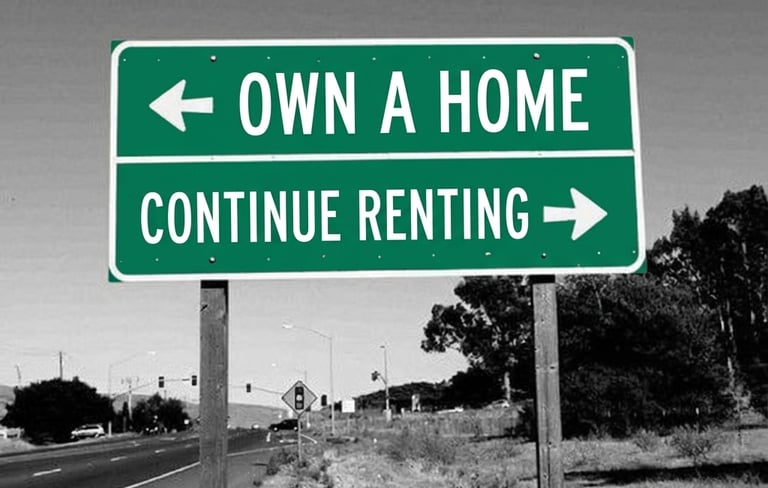


Once you've assembled at least 3.5% down and cleaned your credit as best as you can, it is time to set realistic budget amounts for your future home purchase.
You should ideally stay at 28% of your gross monthly salary (Good Luck With That in LA...) for your home payment. There's much more to this below, but for now, let's CALCULATE YOUR MONTHLY PAYMENT.
PHASE THREE: Mortgage Calculation
PHASE FOUR
LOCK DOWN THE DOWN PAYMENT & FINANCING
The GFSA Platinum down payment assistance program, in particular, provides up to 5% of the loan amount in a non-repayable grant. (You don’t have to pay this back!) Income limits change yearly.
Check with your lender about these programs.
Key GSFA and Related LA County Income Details (2025-2026):
GSFA Platinum (FHA/VA/USDA): No specific income cap set by GSFA; adheres to lender/agency limits.
GSFA Platinum (Conventional): Often utilizes 80% or 120% AMI limits. For example, 80% AMI in LA County can range from $58,450 (1 person) to $90,200 (5 people).
LA County Affordable Homeownership/LIPA: For 2025, 80% AMI limits range from $84,850 (1 person) to $130,850 (5 persons).
Income Definition: Gross annual household income, including all non-minor residents.
Golden State Finance Authority | GSFA +4
GSFA for the WIN.
PHASE FIVE
DETERMINING WHAT TO OFFER
ON THE HOME
THE PRICE
The first step in determining the price you are willing to offer is to look at the recent sales of similar homes. These are called "comparable sales." Comparable sales are recent sales of homes that compare closely to the one you are looking to purchase. Specifically, you want to compare prices of homes that are similar in square footage, number of bedrooms and bathrooms, garage space, lot size, and type of construction.
If the home you are interested in is part of a tract of homes, then you will most likely find some exact model matches to compare against one another. There are three main sources of information on comparable sales, all of which are easily accessed by a real estate agent. It is somewhat more difficult for the general public to access this data, and in some cases impossible. Two of the most obvious information sources are the public record and the Multiple Listing Service.
LOOKS ARE DECEIVING
There are some red flags to look for as you click through pictures that may not always show the true details of a property:
Are there more photos of the exterior than the interior? The inside might need work. Closed curtains and blinds in a photo are usually hiding a bad view.
If a picture of a bathroom focuses on a sink, it can mean the bathroom is painfully small.
If photos look stretched out, the seller or agent is trying to make a room appear bigger.
Some listing terms are red flags as well.
A "fixer-upper" can mean a great investment or a money pit, and "cozy" generally means the home is small.
If the home has been on the market longer than a month, it is ripe for a discounted offer, at least in the Southern California market until further notice. A healthy market is a 5-7 month supply of homes.
What will make your offer stronger? Cash offers carry a ton of influence, but financing offers can win the day when they have fewer contingencies, shorter inspection times, and buyers with the credit and lender who look like they can CLOSE the deal. Sellers have no appetite for a deal falling through.
WRITING THE OFFER
In an offer to purchase real estate, you include not only the price you are willing to pay but other details of the purchase as well. This includes how you intend to finance the home, your down payment, who pays what closing costs, what inspections are performed, timetables, whether personal property is included in the purchase, terms of cancellation, any repairs you want to be performed, which professional services will be used, when you get physical possession of the property, and how to settle disputes should they occur.
CONTINGINCIES
Some "move-up" buyers often agree to purchase a home before selling their previous home. Even if the home is already sold, it is probably a "pending sale" and has not closed. Therefore, you should make closing your own sale a condition of your offer. If you do not include this as a contingency, you may find yourself making two mortgage payments instead of one.

PHASE SIX:
ESCROW
Once your offer is accepted, you'll have a checklist of things to do, with deadlines. (Don't worry, we handle much of what follows:)
1. Send the escrow company a copy of the fully executed offer to purchase real estate
2. Obtain wire transfer instructions from the escrow company so that you can send your earnest money deposit Provide the escrow company with your earnest money deposit
3. Send your lender a fully executed copy of the offer to purchase real estate
4. Get a list from your lender of all documents they need from you
5. Send your lender all documents they need for the underwriter to approve your loan
6. Review escrow instructions provided by the escrow company
7. Obtain documents from the escrow company, including the preliminary title report, termite certificate, natural hazard disclosure report, FIRPTA affidavit and HOA docs and HOA transfer fee, if applicable
8. Review and sign the Sellers Disclosure packet
9. Verify that your lender scheduled the appraisal so the appraisal contingency can be removed in a timely manner
10. Schedule and complete a general home inspection 10. Schedule and complete a termite inspection
11. Schedule and complete any special inspections, such as roof, plumbing, chimney, electric, sewer or mold
12. Deliver a Request for Repair to seller, if applicable
13. Sign and deliver the Contingency Removal form, removing all contingencies and making your earnest money deposit subject to forfeiture
14. Review the estimated closing costs worksheet provided by the escrow company 15. Schedule a final walk-through with seller
16. Obtain homeowners insurance
17. Provide the escrow company with proof you have obtained home owner's insurance
18. Wire your down payment to the escrow company
19. Visit the escrow company to sign your loan docs and Transfer of Ownership docs with a notary, or arrange for the signing to occur elsewhere
20. Confirm the escrow company has everything it needs for closing
21. Confirm the closing recorded via the escrow company
22. Obtain keys and take possession of your new home
And that's that? Well, yes and no. There will ALWAYS be twists and turns in every home purchase. What's important is COMMUNICATION, and PATIENCE. You'll never want to visit Docusign.com again, and you'll wonder how many hours of sleep you lost, but it is worth it!!


First Time Buyers
Top First-Time Home Buyer Loan Programs
FHA Loans: Best for lower credit scores (580 minimum) and limited savings, requiring only 3.5% down, according to The Mortgage Reports.
Conventional 97 / Fannie Mae HomeReady: Ideal for buyers with decent credit (620+), requiring only 3% down, as mentioned in The Mortgage Reports.
VA Loans: Best for veterans and active-duty service members, offering
down payment and no monthly mortgage insurance, according to CNBC.
USDA Loans: Best for low-to-moderate income buyers in designated rural/suburban areas, offering
down, say The Mortgage Reports.
State/Local Assistance Programs: Programs like California Housing Finance Agency (CalHFA) provide down payment and closing cost assistance (e.g., MyHome program) to help with initial costs.
California Housing Finance Agency | CalHFA (.gov) +4
Best Lenders for First-Time Buyers
Best Overall: Bank of America
Best for Low Down Payment: Rocket Mortgage (1% down option)
Best for Variety: Guild Mortgage
Best for Veterans: Veterans United
Best for Grants/Assistance: Chase
Bankrate +3
Key Considerations for First-Time Buyers
Down Payment Assistance: Look for state-specific programs (like CalHFA in CA) that provide second mortgages or grants to cover down payments.
Credit Score: A 580+ score is generally needed for FHA, while 620+ is preferred for conventional loans.
Mortgage Insurance: Low-down-payment loans (FHA and Conventional) usually require mortgage insurance (PMI or MIP).